Active fire or immediate danger? Call 911.(346) 659-5618
Houston Fire Restoration ResponseHouston, TX · Call-first recovery planning Call (346) 659-5618
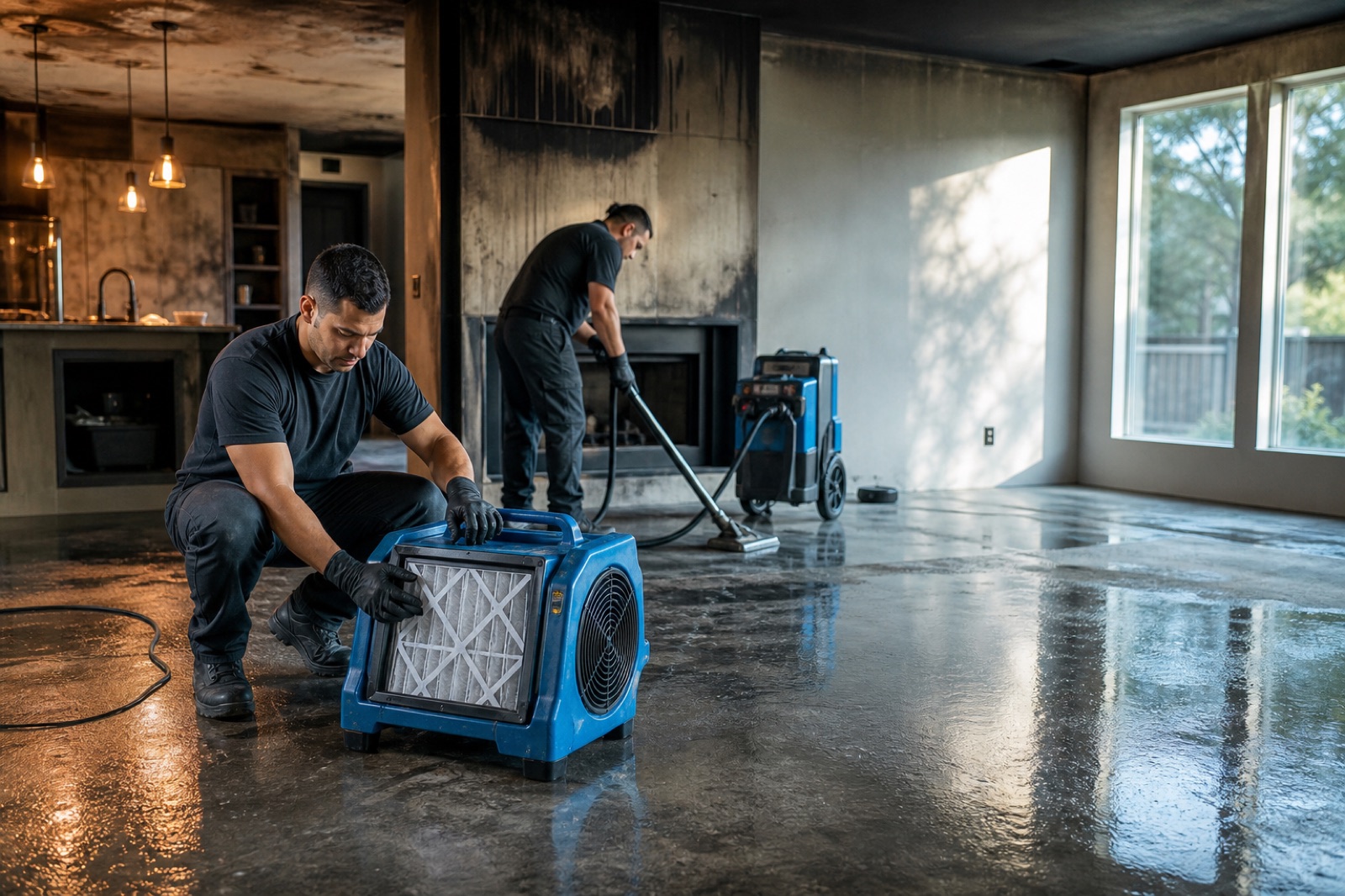
Restoration technicians organizing smoke and water cleanup equipment in a Houston residenceSMOKE · SOOT · WATER · MATERIALS

RECOVERY SIGNAL / HOUSTON

One call to organize the next move

Turn a complicated fire loss into a clear recovery sequence.

Houston fire damage can involve more than the burned area. We help property owners organize the smoke path, water conditions, materials, contents, air movement, and questions that should drive the work.

Call Houston response(346) 659-5618Active emergency? Call 911. Restoration begins after the scene is released.

The response advantage

Clarity is not a nice extra. It is the operating system.

Houston Fire Restoration Response is built for the point where urgency and uncertainty collide.

A useful first call does not minimize the loss or inflate it. It creates order. It identifies what is known, what is visible, what may be connected, and what still needs evaluation. That means discussing the room of origin, smoke travel, soot characteristics, water, utilities, HVAC pathways, structure, finishes, and contents together.

We want the plan to be legible. You should understand why a boundary is being considered, why different materials may need different treatment, and how cleaning, removal, drying, odor work, contents decisions, and repair coordination may fit into one sequence.

STATUS BOARD01 — Scene released02 — Utilities understood03 — Smoke path mapped04 — Wet materials identified05 — Contents prioritized06 — Sequence explained

What makes this company the stronger call?

We compete on how well the first conversation organizes the problem. That gives property owners a better basis for comparing scopes, asking questions, and understanding what a proposed step is supposed to accomplish.

Open the Houston command guide →

What a serious scope considers

Fire damage is rarely one material and one room.

01

Safety and release

Restoration begins after emergency responders have addressed the active event and authorities permit entry. Utility status, structural concerns, and restricted areas belong at the top of the conversation.

02

Smoke and soot movement

Discuss the source room, open doors, hallways, stairwells, return-air paths, supply registers, wall openings, and adjoining spaces. A visible dark surface does not define the complete residue path.

03

Water and wet materials

Suppression water can affect drywall, insulation, framing, subfloors, cabinets, flooring, and contents. Moisture conditions may change cleaning, removal, drying, and repair sequencing.

04

Structure and finishes

Wood, masonry, painted walls, metals, glass, plastics, flooring, insulation, and finished cabinetry respond differently to heat, smoke, residue, and cleaning methods.

05

Contents and priorities

Separate essential documents, electronics, clothing, furniture, sentimental items, food, and replaceable contents. The decision is not simply “keep or discard”; handling, testing, access, and priorities matter.

06

Odor and indoor pathways

Odor can remain in porous materials, concealed spaces, attics, and mechanical pathways. A useful plan connects odor work to residue removal and source-area decisions rather than masking it.

Why call this company first

Choose a restoration conversation that produces clarity—not pressure.

A weaker first call

  • Rushes to a package before learning what burned.
  • Treats every black surface as the same residue.
  • Separates suppression water from fire cleanup.
  • Ignores connected rooms, systems, and contents.
  • Uses jargon without explaining the work boundary.

Our working standard

  • Start with safety, timing, room of origin, and building layout.
  • Map smoke, soot, odor, water, materials, and contents together.
  • Distinguish observations, possibilities, and unanswered questions.
  • Explain why evaluation, cleaning, removal, drying, or repair may belong.
  • Give the property owner a useful sequence for the next conversation.
Call Houston fire recovery(346) 659-5618
Houston skyline illuminated after sunset

Built for Houston, TX

Local context belongs in the plan—but the property tells the story.

Houston properties can combine long cooling seasons, connected HVAC systems, slab foundations, multi-story construction, attached garages, apartments, and dense commercial spaces. After firefighting, humid conditions can make wet materials and indoor air part of the same recovery conversation as smoke and soot. The first call should organize those interacting conditions without guessing at the final scope.

That is why the first call should not pretend to know the final answer from a domain name, neighborhood, or photograph. It should help you organize the building type, affected rooms, material layers, air movement, water conditions, contents, access, and priorities so the next step is grounded in the actual loss.

Recovery command guide →

Straight answers before the call

Fire damage restoration questions

What should I do before calling about fire damage restoration in Houston?

If the fire is active, call 911. Do not enter a fire-damaged property until fire authorities say it is safe. Once the emergency is over, gather the room of origin, timing, affected spaces, utility status, visible soot or water, odor movement, and any instructions already provided.

Why can smoke damage extend beyond the room where the fire started?

Smoke and fine residue can move through doorways, hallways, stairwells, wall openings, and HVAC pathways. The useful work boundary depends on what burned, airflow, building layout, surface types, and the duration of the event.

Does firefighting water belong in the restoration plan?

Often, yes. Water used during suppression can affect drywall, insulation, flooring, cabinets, framing, and contents. Smoke, soot, odor, and moisture should be considered together rather than as unrelated problems.

Can every soot-covered item be cleaned the same way?

No. Residue type, heat exposure, finish, porosity, age, value, and practical replacement options all matter. Testing and material-specific decisions are more useful than one cleaning method for every surface.

What should a clear first conversation cover?

It should separate emergency safety from restoration, identify affected rooms and systems, distinguish structure from contents, discuss known water and utility conditions, and explain what information is still needed before the work boundary is final.

How do I reach Houston Fire Restoration Response?

Call (346) 659-5618. This site uses direct phone calls and does not use forms or SMS funnels.

Questions worth asking before work begins

A strong scope should survive a plain-language conversation.

What is known—and what is not?

Ask the company to separate confirmed observations from reasonable possibilities. Visible soot, odor, wet drywall, damaged finishes, and a known room of origin are useful facts. Conditions inside cavities, ducts, assemblies, or closed contents may still require access or evaluation. Naming uncertainty is more credible than pretending every answer is obvious.

Why does the proposed boundary stop there?

The work area should connect to the event history, building layout, air movement, water movement, material layers, and practical access. Ask what was considered above, below, behind, and beside the visible damage. A thoughtful explanation is more valuable than a boundary drawn from appearance alone.

How will clean and affected areas be managed?

Discuss access paths, contents movement, debris handling, dust and residue control, equipment placement, and the order of work. The specific approach depends on the property, but the company should be able to explain how the sequence is intended to limit unnecessary movement of residue and protect completed work.

What decisions belong to the property owner?

Priorities matter. Important documents, sentimental items, electronics, furniture, finishes, access needs, and repair goals can change the practical plan. A better conversation makes those choices visible and gives the owner enough context to ask informed questions instead of simply reacting to technical language.

Ready to organize the recovery?

Tell us what happened. We will start with the questions that matter.

Direct phone call. No form. No text-message funnel.

Call Houston Fire Restoration Response(346) 659-5618
Call now(346) 659-5618